blog


The contents of this blog post have been partially transcribed from our YouTube video, “Inflation Reduction Act (IRA) Overview”.
The Inflation Reduction Act, or, the IRA is the biggest investment in clean energy in the United States. The goal is to fight climate change and increase economic opportunity. The tax incentives are available to all taxpayers, corporate and private entities that meet the criteria within each tax provision. For many of these provisions come the inclusion of prevailing wage and apprenticeship requirements.
On August 16th, 2022, the Inflation Reduction Act was signed into action, providing tax incentives for several tax credit provisions that involve clean energy projects.
One specific example Is the Production Tax Credit. This provides taxpayers the possibility of acquiring $2.60 per kilowatt hour credit for electricity produced at qualified facilities. To gain this credit, taxpayers would have to satisfy the prevailing wage and apprenticeship requirements, otherwise that credit is reduced.
In the context of the IRA, a taxpayer is anyone attempting to receive the tax credit or incentive, and this includes contractors.
The Davis-Bacon Act and the Related Acts itself are not subject under the IRA, including enforcement regulations. However, there are similarities in how certain provisions are derived.
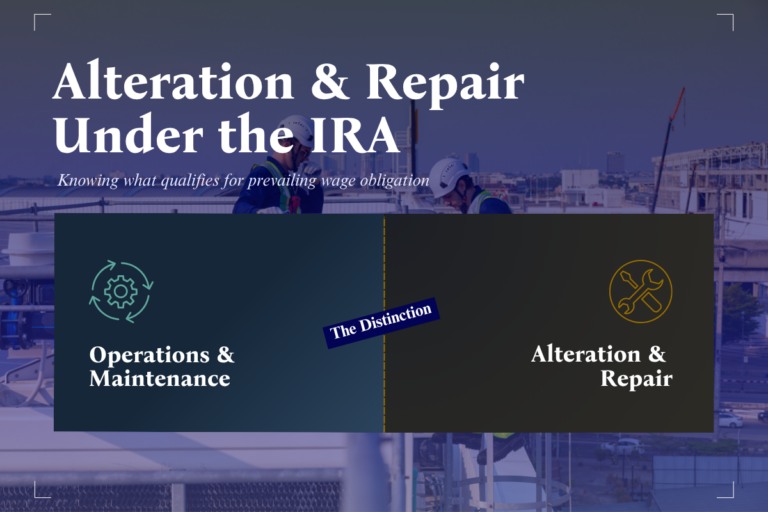
The IRS 87 FR 73580 guidance outlines requirements for obtaining tax credits. The two main ones to be found for prevailing wage are (1) the payment of prevailing wage rates and (2) maintaining records. The applicable rates are to be found for laborers and mechanics as defined at 29 CFR 5.2(m), performing construction, alteration, or repair.
Remember, there is no exception for independent contractors.
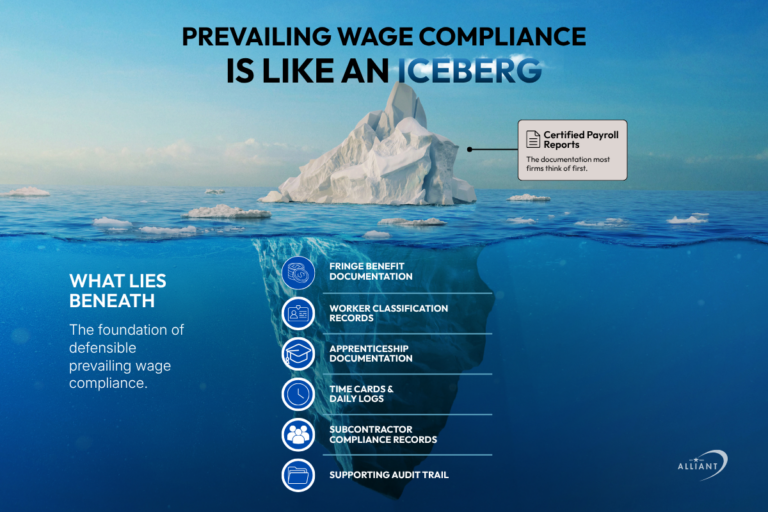
Section 16.001-1(a) of the Income Tax Regulations states taxpayers must keep records to establish the amount of claimed credits. This documentation should include the applicable wage determination provided by the DOL and documentation showing each worker, their classification, gross pay, hours worked, and proper prevailing wage rate of pay. This includes the appropriate fringe benefits. It’s important that these records are maintained to prove the requirements are being met.
If a taxpayer fails to pay prevailing wage rates, they can still be considered to have satisfied the requirements if they:
This fine increases to three times the sum of (a) and $10,000 per violation if it was found to have been an intentional underpayment.
On August 29th, 2023, the IRS and the Treasury issued “proposed rules” that would update the PWA (prevailing wage and apprenticeship) requirements under the Inflation Reduction Act. The document provides clarification on many issues that arose after the original guidance was published in November of 2022. Some of the highlights include:
Many major topics are addressed, including cure and penalty provisions for failure to meet the requirements. Any taxpayer wishing to claim the increased tax credits should ensure that they are familiar with these proposed regulations. Alliant is here to help answer any questions, help clients stay informed, and to ensure full compliance with all of the IRA PWA requirements. If you’d like any further assistance, feel free to contact us.
blog

blog

blog
blog

blog
blog