
blog

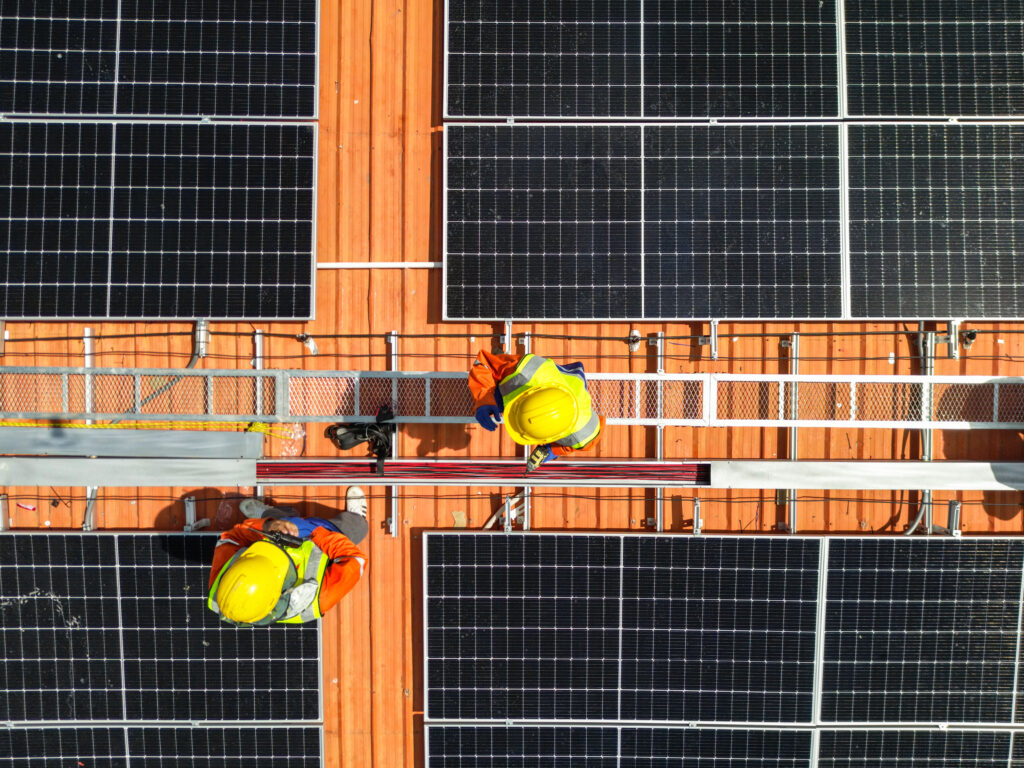
The Climate and Equitable Jobs Act (CEJA) and the Illinois Shines program have reshaped renewable energy projects in Illinois, requiring contractors to pay prevailing wages and meet equity standards. For an introduction to CEJA, the Adjustable Block Program, and the Minimum Equity Standard, visit this blog for the full scope. Here, we address guidance on the practical compliance questions that arise during project execution.
Certified payroll reports are required, but they are only the starting point. Contractors must also maintain:
Without these supporting documents, certified payroll reports alone will not withstand a governmental audit.
CEJA and Illinois Shines classify projects as “public works,” meaning all tiers of subcontractors must comply. All individual contractors are responsible for ensuring subcontractor compliance. These responsibilities include:
Contractors that are not informed of the prevailing wage requirements on public works projects by a public body are still liable for the difference between the amount paid and the prevailing wage. If a contractor fails to notify a subcontractor of prevailing wage requirements, the contractor becomes liable for interest, penalties, or fines assessed by the IDOL (Illinois Department of Labor). The subcontractor is still, however, liable for paying the proper prevailing wage rate.
Under Illinois law, contributions to health insurance, retirement plans, and trainingcontributions to registered apprenticeship programs qualify. These must be documented separately from wages.
It is vital that contractors only take credit up to the amount listed in each column on the wage determination. For example, if a Carpenter classification has a $9.95 amount in the “H/W” (Health and Welfare) column, then $9.95 is the maximum amount the contractor can take credit for. So, even if a contractor is paying $15.00 in health insurance, they can only take credit for up to $9.95 for that classification.
Prevailing wage rates are county-specific and updated monthly by the Illinois Department of Labor. Contractors must monitor updates throughout the project to avoid underpayment. Learn more about fringe benefits here.
CEJA emphasizes workforce development. Contractors must comply with apprenticeship utilization requirements, which means:
Section 1‑75(c‑10) of the Illinois Power Agency Act requires the Illinois Power Agency (IPA) to create an Equity Accountability System, which includes the Minimum Equity Standard.
The MES sets a required percentage of your project workforce that must be made up of Equity Eligible Persons (EEPs). This applies to:
The goal is simple: ensure that the clean energy boom in Illinois creates opportunities for workers who have historically been left out of these industries.
CEJA defines four categories of workers who qualify as EEPs. A worker is considered an EEP if they meet any of the following:
1. Graduates or participants of state‑supported clean energy training programs
This includes programs such as:
2. Individuals who are or were part of the foster care system
3. Individuals who were formerly incarcerated
4. Residents of an Equity Eligible Investment Community
Contractors often wonder: What triggers an audit? Common triggers include:
Penalties for non-compliance include fines, withheld incentive payments, and potential debarment from future public works projects.
Prevailing wage compliance is directly tied to incentive eligibility under Illinois Shines. Failure to comply can result in:
CEJA and Illinois Shines are transforming Illinois’ renewable energy landscape, but compliance is more than filing certified payroll reports. Contractors must maintain supporting documentation, monitor subcontractor compliance, track fringe benefits, and prepare for audits. With enforcement increasing, expert guidance is indispensable.
Alliant Consulting bridges the gap between compliance management and contractor confidence, helping firms close projects with the assurance that prevailing wage obligations have been met. Partner now to secure assistance on your projects.
blog
blog

blog

blog

blog

blog